Construction & Excavation Services in Denver, CO
Local Concrete Expertise
In Congress Park and across Denver, a concrete contractor with deep local knowledge handles the real challenges of our climate. We work with durable concrete solutions built for Denver's freeze-thaw cycles, expansive clay soils, and high-altitude weather swings. Whether you need a driveway, patio, foundation work, or decorative concrete finishes, we're familiar with every neighborhood's unique ground conditions and local codes.
This page covers concrete contractor and paving contractor services for Denver, CO, with detailed guidance on why local expertise matters, what's involved in proper installation, and how to protect your investment long-term.
How We Work
A clear process ensures your concrete project succeeds in Denver's demanding environment.
Our Process in Five Steps
We start by evaluating your site's soil, drainage, and structural demands. For driveways in Capitol Hill or patios in Wash Park, each property sits on the same expansive clay soils. We assess water flow, existing foundation movement, and whether the ground has settled or heaved over time. Then we prepare an honest scope, explain options, and schedule the work with clear expectations.
Site Assessment
We check soil type, drainage patterns, and existing settlement. In Denver's clay-heavy neighborhoods, this step prevents costly mistakes.
Prep & Grading
Proper base prep separates long-lasting work from short-lived surfaces. We compact subgrades and ensure water flows away from your foundation.
Concrete Mix Design
Denver requires air-entrained, 4,000-PSI concrete formulated to survive freeze-thaw cycles. We spec mixes proven in Colorado conditions.
Installation & Finishing
Proper control joints, finishing, and curing techniques prevent cracking and ensure even surfaces that handle load and settlement.
Sealing & Maintenance Plan
We recommend freeze-thaw-resistant sealing in early fall to block moisture and prevent spalling from road salt and winter damage.
You'll always know what's happening next—and why each step protects your investment.
Our Services
From driveways to decorative finishes, we offer concrete solutions tailored to Denver's climate and soil.
Concrete Driveway Installation
Driveways in Denver neighborhoods like LoHi, RiNo, and Capitol Hill face unique challenges. Our concrete drives are built for expansive clay soils that move seasonally and endure hundreds of freeze-thaw cycles per winter. We use air-entrained concrete and proper drainage design to prevent the spalling and settlement that plague older driveways across the city.
- 4,000-PSI air-entrained mix rated for Colorado freeze-thaw
- Proper slope and drainage to shed water away from foundation
- Control joints spaced to prevent random cracking
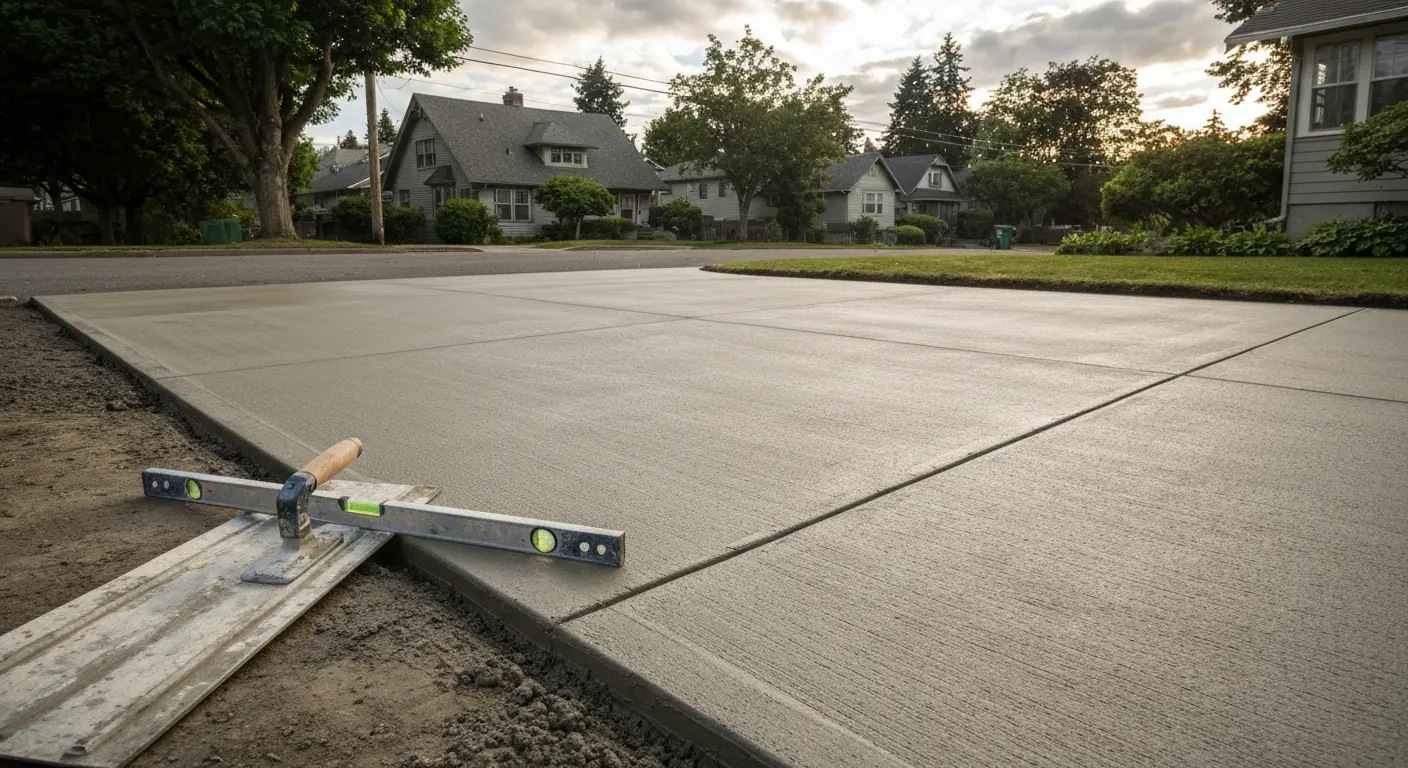
Durable concrete driveway in a Capitol Hill neighborhood with proper grading for winter weather.
Concrete Patios & Outdoor Spaces
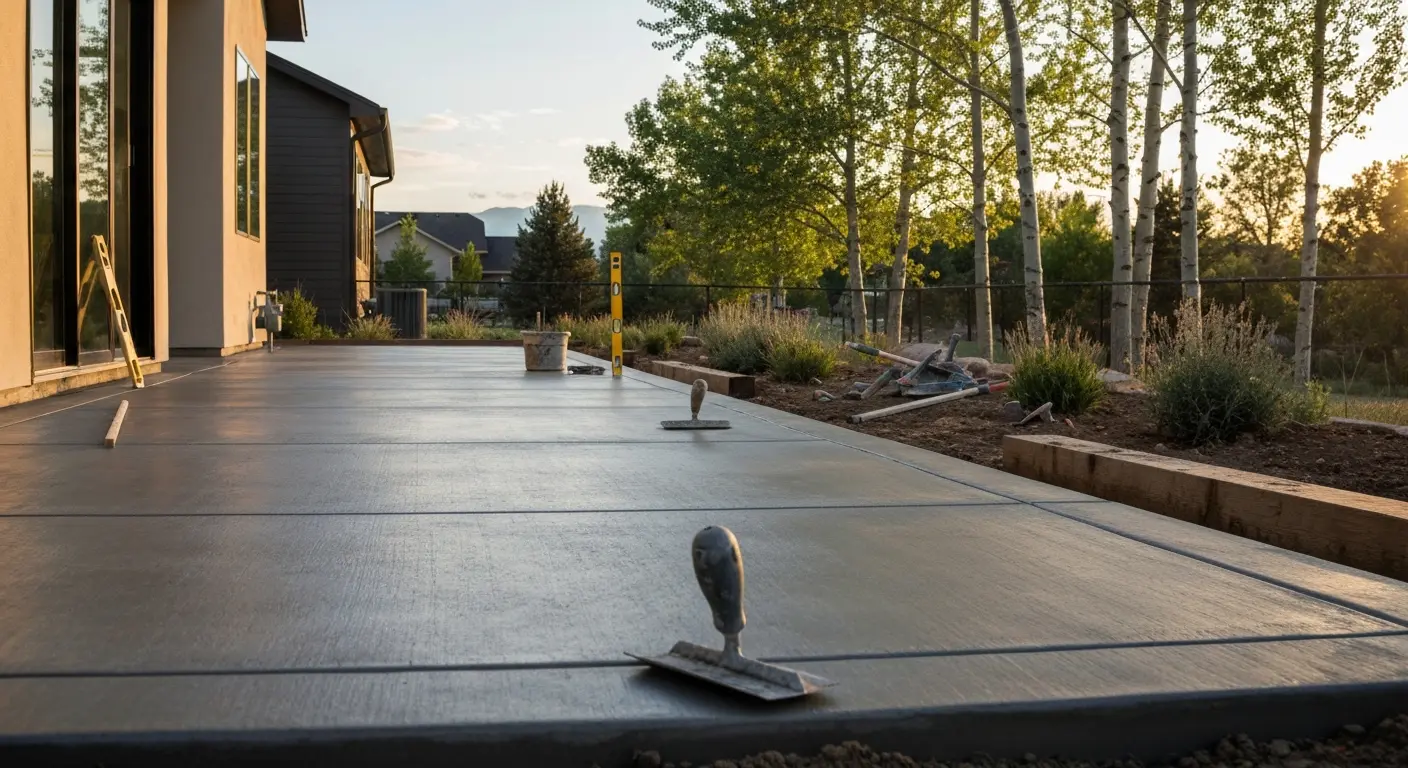
Finished concrete patio in Wash Park neighborhood, built to withstand seasonal soil movement.
Patios are gathering spaces, but Denver's soil expansion and contraction demand expert workmanship. We build patios that stay level and safe year after year. Proper grading prevents pooling water, which accelerates freeze-thaw damage and magnesium chloride scaling from winter street treatment.
- Stable base and compacted subgrade to resist heaving
- Level surfaces safe for furniture and foot traffic
- Optional decorative finishes for aesthetic appeal
Stamped & Decorative Concrete
Add character to your property with stamped or stained concrete that mimics stone, brick, or wood. In neighborhoods like Congress Park and Highlands, decorative concrete enhances curb appeal while delivering durability. We use color-fast stains and proven finishing techniques that survive Denver's intense UV exposure and daily temperature swings.
- Professional stamping and color staining
- UV-stable finishes for Colorado's high-altitude sun
- Custom designs tailored to your home's character
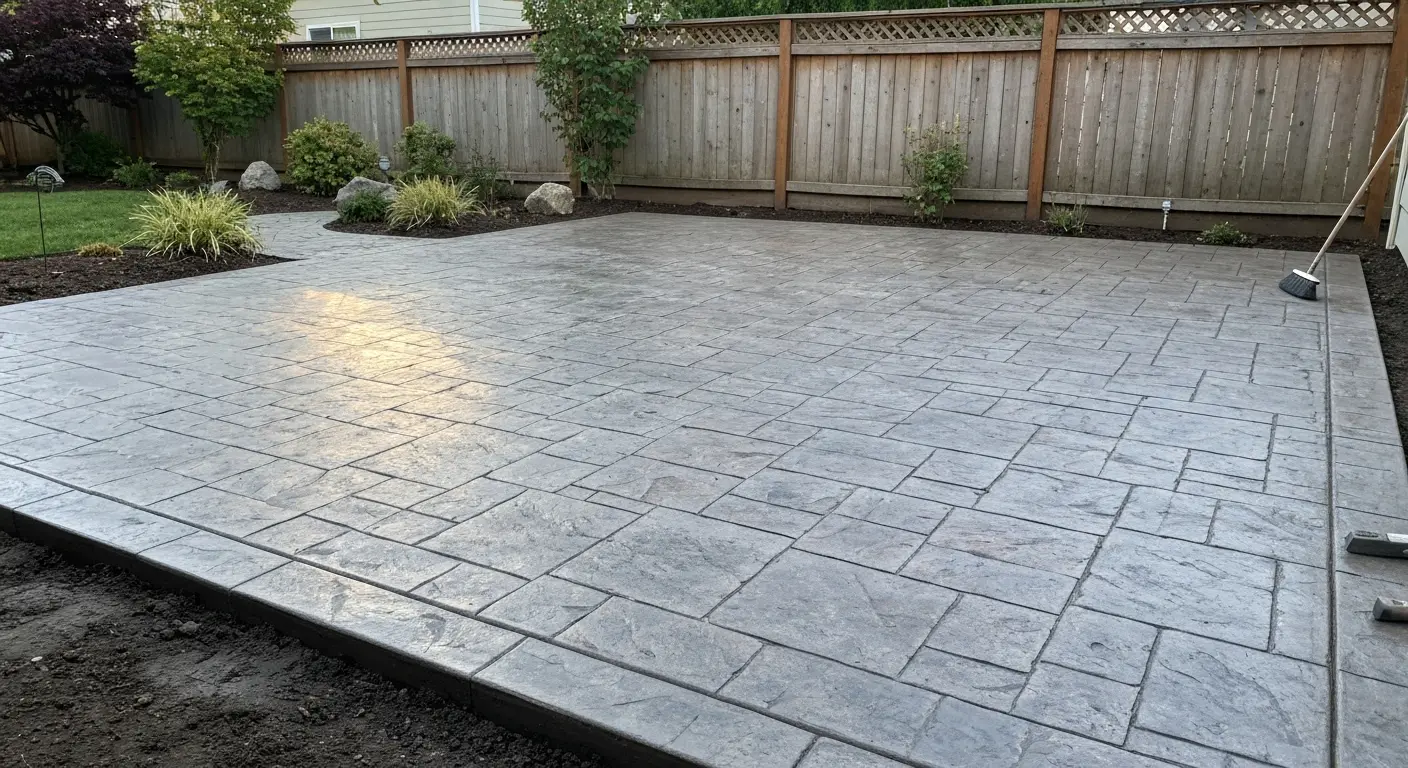
Stamped concrete with custom finish showing stone-like pattern in a Washington Park home.
Concrete Foundation Work
Denver's expansive clay soils cause foundation movement and cracking in nearly every neighborhood. We handle concrete foundation repair, mudjacking, and stabilization. If your basement slab has sunk due to soil settlement, or patios show trip hazards from freeze-thaw heave, we assess the root cause and recommend lasting solutions.
- Concrete slab leveling and void filling for sunken surfaces
- Crack repair and waterproofing to prevent further damage
- Structural assessment and remediation plans
Why Local Expertise Matters
Denver is not a one-size-fits-all concrete market. Our city's unique geology and climate demand contractor expertise built over years of local experience.
Denver's expansive bentonite clay soils expand when wet and contract when dry. This cycle happens seasonally and stresses every concrete surface. Contractors unfamiliar with this reality often use shallow bases and inadequate mixes—resulting in settled driveways and cracked patios within years.
Freeze-Thaw Damage Is Cumulative
Denver winters bring 157 nights of sub-freezing temperatures, but daytime highs often climb back above 32°F—especially in spring and fall. This repeated cycling pumps water into concrete pores, where it expands and contracts. Each cycle weakens the surface a little more. After hundreds of cycles, hairline cracks become quarter-inch gaps, and surface flaking (spalling) accelerates. Road salt and magnesium chloride speed the process.
Our Contractor Guarantee
When you hire a contractor who knows Denver's soils, you get work spec'd for the environment. We use air-entrained concrete, proper drainage design, and proven finishing techniques. We don't cut corners on base preparation or material selection. That's why our concrete lasts—and why we stand behind our work.
Serving Denver's Neighborhoods
We work across Denver's residential and commercial areas, from close-in neighborhoods to outlying communities.
Urban & Central Denver
In Capitol Hill, RiNo, and downtown-adjacent neighborhoods, parking and site access are tight. We manage equipment and logistics efficiently, minimizing disruption while delivering clean, professional work. Many homes here are older Victorian and early-1900s construction sitting on original concrete that's failed or heaved due to aging and soil movement.
South & Southeast Denver
Wash Park, Congress Park, and surrounding neighborhoods feature tree-lined residential blocks with ample space for driveways and patios. Many HOAs have design guidelines or approval requirements—we're familiar with local rules and can guide you through the permitting process. Drainage design is critical in these areas, where mature landscaping and sloped terrain can concentrate water.
Northwest & Highlands
LoHi and other Highlands neighborhoods combine historical charm with newer development. Hillside properties require careful grading and erosion control. We design sloped driveways and patios that shed water effectively and resist settling on clay slopes.
Frequently Asked Questions
Do I need a permit for a new driveway or patio in Denver?
Yes. Driveway installation, foundation work, and most concrete flatwork in Denver require a building permit. We coordinate the permit application and inspections. Check with your HOA first—some neighborhoods have additional architectural approval requirements before you can apply.
Why does concrete crack in Denver?
Freeze-thaw cycles and expansive clay soils cause most cracking. Water penetrates porous concrete, freezes and expands, then thaws. This happens hundreds of times per winter. Shallow bases, inadequate mixes, and poor drainage accelerate damage. Proper air-entrained concrete, deep compacted bases, and slope prevent most cracking.
Should I seal my concrete driveway or patio?
Yes. In Denver, we recommend freeze-thaw-resistant sealing applied in early fall. The sealer blocks moisture and prevents road salt from penetrating. Resealing every 2–3 years maintains protection and keeps your concrete looking fresh.
Can you fix a sunken or heaved patio or driveway?
Yes. We use concrete leveling and void-filling to raise sunken slabs and stabilize heaved areas. In some cases, if damage is extensive, replacement may be more cost-effective. We assess the condition and recommend the best approach.
What concrete mix should I specify for Denver?
We recommend 4,000-PSI air-entrained concrete for freeze-thaw climates. Air entrainment creates microscopic bubbles that allow water expansion without cracking. A low water-to-cement ratio and proper control joints are essential. We spec mixes proven in Colorado conditions and resist salts used on winter roads.
DISCOVER WHAT OUR CUSTOMERS HAVE TO SAY ABOUT US
REVIEWS
proudly serving these areas
Aurora, CO
Castlerock, CO
Denver, CO
Elizabeth, CO
Englewood, CO
Highlands Ranch, CO
Littleton, CO
Parker, CO
READY TO take the next step?
get a free quote TODAY!
COMPANY
(303) 419-5468
QUICK LINKS
our services
service areas
operating HOURS
Mon: 7:00 am - 4:00 pm
Tue: 7:00 am - 4:00 pm
Wed: 7:00 am - 4:00 pm
Thu: 7:00 am - 4:00 pm
Fri: 7:00 am - 4:00 pm
Sat: 7:00 am - 4:00 pm
Sun: 7:00 am - 4:00 pm